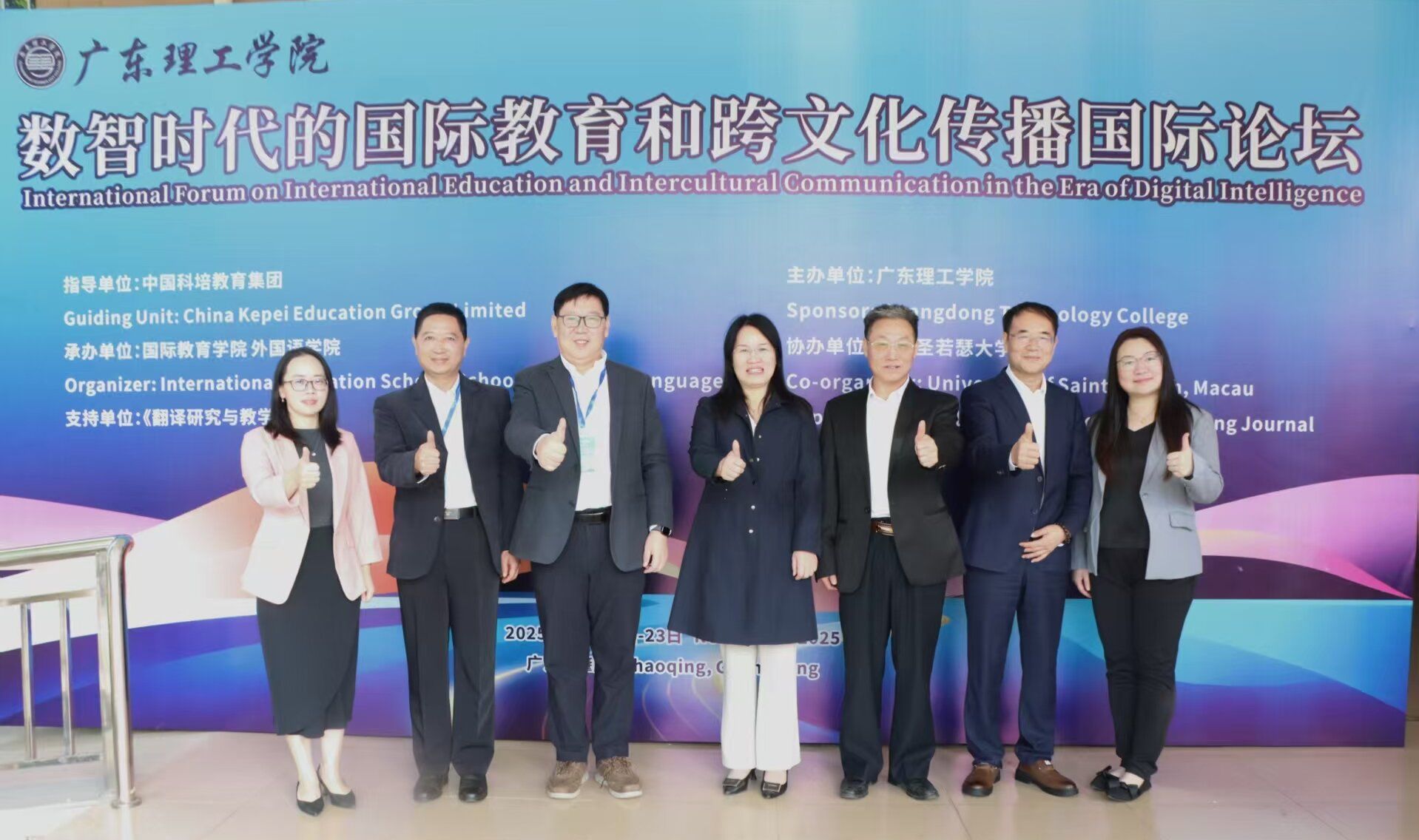
From November 22 to 23, 2025, China KEPEI Education Group, in collaboration with its subsidiary Guangdong Technology College, successfully hosted the "International Forum on International Education and Cross-Cultural Communication in the Digital-Intelligence Era." With the Gaoyao Campus of Guangdong Technology College as the main venue, co-organized by the University of Saint Joseph, Macao, and with academic support from the journal Translation Research and Teaching, the forum brought together over 280 experts, scholars, and representatives of teachers and students from more than 80 domestic and international universities in Zhaoqing, Guangdong, to explore new paths for educational innovation and cross-cultural communication empowered by digital technology.
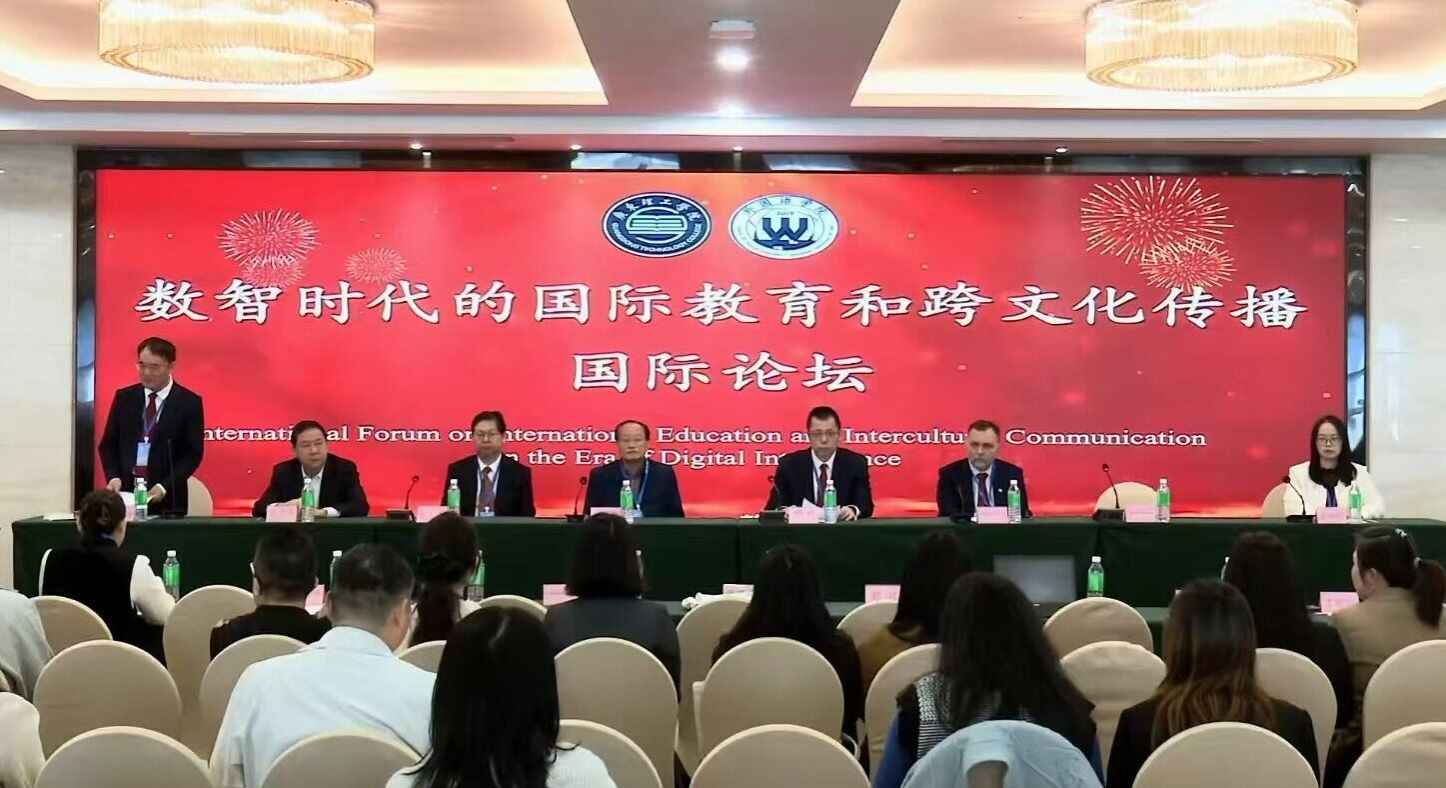
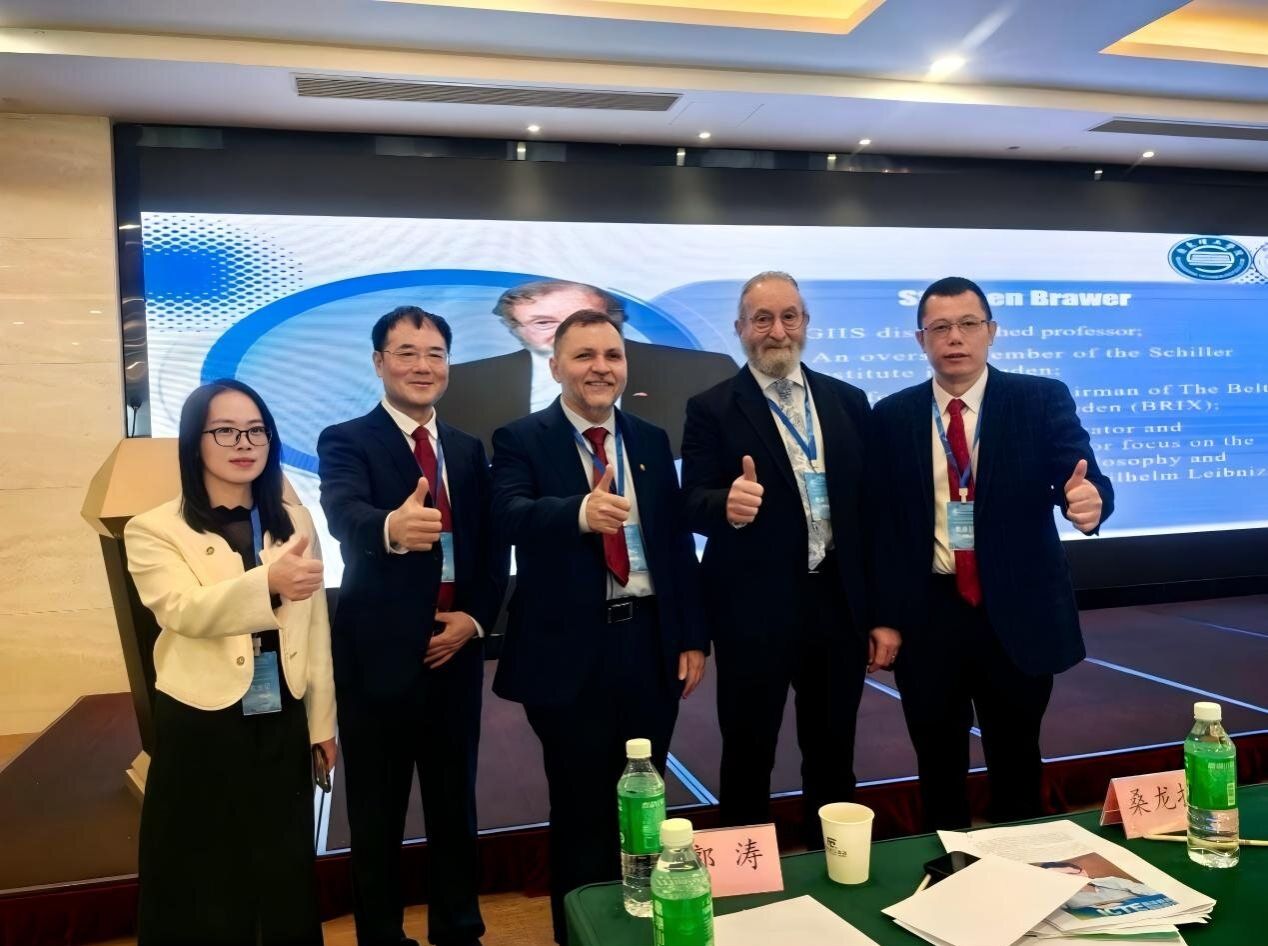
The main forum featured a gathering of distinguished guests and a strong academic atmosphere. Professor Ágora Rocha, Vice-Rector of the University of Saint Joseph, Macao, discussed the ethics and practical pathways of AI in international education. Professor Wang Binhua, Chair Professor at the University of Leeds, UK, elucidated the key role of translation in cross-cultural communication through rich case studies. Professor Kang Zhifeng from Fudan University proposed a "Five Thinking" system essential for international communication talents. Mr. Stephen Brawer, Director of the Sweden-based Belt and Road Institute, critiqued Western cognitive biases regarding the Belt and Road Initiative from the perspective of mutual learning among civilizations, advocating for in-depth dialogue between China and Europe. Furthermore, Professor David Johnston from Queen's University Belfast, UK, and Professor Li Xiaoying from Chongqing University shared their research findings from the perspectives of functionalist translation theory and cultural translation principles, respectively.


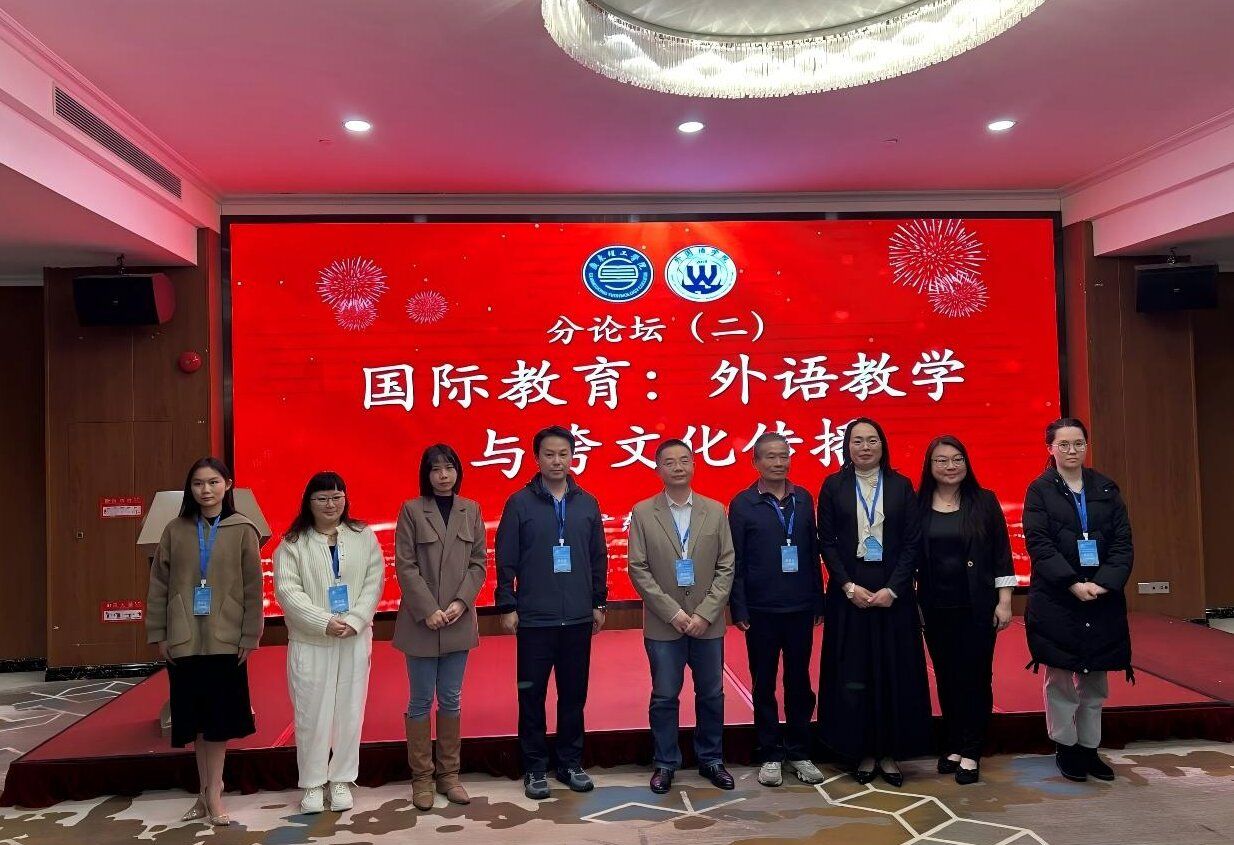
To facilitate in-depth discussions, the forum established three parallel sub-forums focusing on "Translation and Cross-Cultural Communication," "Foreign Language Teaching and Cross-Cultural Competence Cultivation," and "Internationalization of Education and Digital-Intelligent Transformation." Participants engaged in ample exchanges on topics such as AI-assisted translation of cultural terms, digital competency of international Chinese language teachers, the construction of regional education cooperation alliances, and innovations in Sino-Japanese university exchange models, forming a series of consensuses and recommendations with practical value.


On the second day of the forum, two special teaching lectures were held in English and Japanese. Professor Han Jinlong from South China University of Technology systematically expounded on the reform path for college English teaching characterized by "Integration of General and Professional Education, Empowered by AI." Professor Dong Jinwei from Guangdong University of Foreign Studies shared research findings on formative assessment-oriented course design and teaching materials. Professor Li Guangzhen from Shandong Normal University and Professor Li Liwei from Jinan University conducted in-depth analyses on the co-creation models between Chinese and Japanese universities and the cross-cultural communication of Mei Lanfang, respectively, providing solid theoretical support and classroom practice references for university teachers.
In the future, with the continued support and assistance of China KEPEI Education Group, Guangdong Technology College will persistently advance the transformation and application of the forum's outcomes, strengthen the integration and innovation of international educational resources, and contribute to building an open, inclusive, and collaborative new educational ecosystem for the digital-intelligence era.


