Ⅰ Introduction
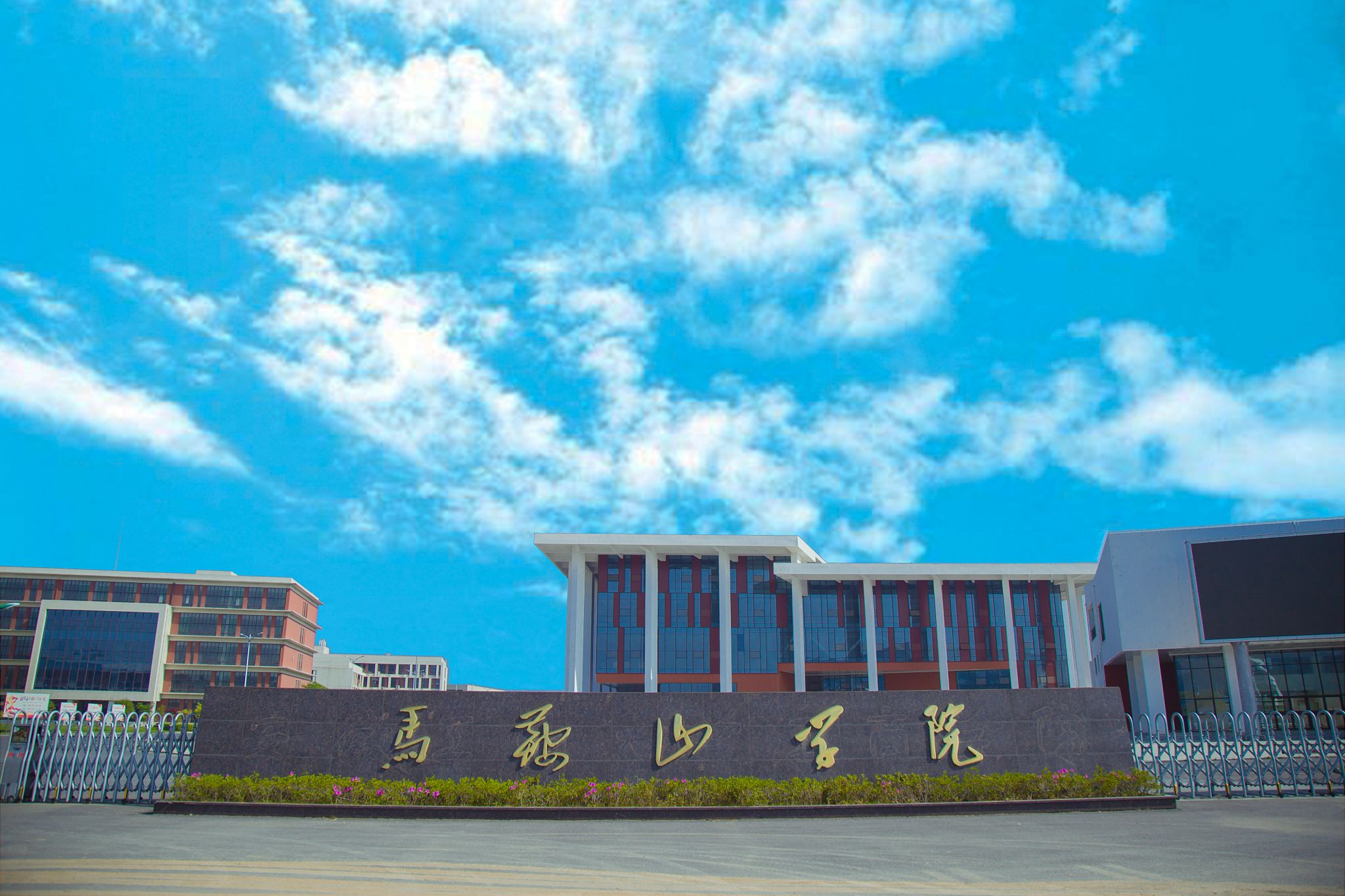
Ma’anshan University is situated in Ma’anshan, famously known as the Poetry City of China. This key city lies at the crossroads of the Hefei and Nanjing Metropolitan Circles within the Yangtze River Delta region. Originally established as the Industrial and Commercial College of Anhui University of Technology in 2003, it was officially transformed into Ma’anshan University, a private application-oriented university in June 2019, with approval from the Ministry of Education and oversight by the Department of Education of Anhui Province.
The university is dedicated to establishing itself as a high-quality, distinctive, and regionally-focused application-oriented institution. We have 10 schools and one department, including the School of Intelligent Manufacturing Engineering, School of Electrical Engineering, School of Big Data and Artificial Intelligence, School of Health Sciences and Engineering, School of Architecture and Civil Engineering, School of Economics and Management, School of Foreign Languages, School of Art and Design, School of Marxism, and the Department of Fundamental Courses. We offer 35 undergraduate programs within a multidisciplinary framework, with engineering at the forefront, complemented by fields such as economics, management, humanities, and arts. The university boasts comprehensive teaching equipments, excellent facilities, and abundant resources, featuring a modern library, well-equipped laboratories, and practical training bases, providing students with an optimal environment for learning and hands-on practice. With a strong faculty, the University employs a total staff of 892, including 694 full-time faculty members, 95.22% of whom hold master’s degrees or higher. Emphasizing the integration of industry, academia, and research, we focus on cultivating application-oriented talents to meet societal needs. We have nearly 14,000 students enrolled.
Ⅱ Talent Cultivation
Guided by its motto “To Cultivate Virtue and Talent, To Integrate Knowledge with Practice” and upholding the academic ethos of “Solidarity, Diligence, Rigorousness, and Innovation”, the university has pioneered a Trinity Education Model for Applied Talents Development —theoretical instruction consolidates disciplinary foundations, innovation and entrepreneurship education enhances practical competencies, industry-education integration advances collaborative talent cultivation.
With unwavering commitment to academic excellence, the university places a strategic emphasis on theoretical instruction by implementing comprehensive quality assurance measures and fostering pedagogical innovation. To date, the university has secured 349 Provincial-level Quality Enhancement Projects for Higher Education, including: 1 Modern Industry Academy, 5 First-class Undergraduate Program Construction sites, 1 Characteristic Specialty Cluster Development (Pilot) Initiative, 4 Micro-majors, 2 Distinctive Brand majors, 1 Comprehensive Major Reform Pilot Project, 81 Course Development Projects, 14 Textbook Development Projects, 14 teaching teams, 5 Teaching Excellence Award Winners, and 23 Rising Teaching Talents, 105 educational reform research projects, and 15 recognized Teaching Achievement Awards.
We actively support professional development of our faculty through training and teaching competitions, yielding numerous honors. A notable achievement includes our faculty representative, competing on behalf of Anhui Province, winning the first prize in the Undergraduate Practice Group at the 4th Teaching Skills Competition for Faculty of Private Universities in the Yangtze River Delta Region. To leverage research in support of teaching, we have established multiple research platforms, including: 1 Anhui Provincial Key Laboratory, 3 Municipal Key Laboratories, 3 Municipal Engineering Technology Research Centers, and 1 Postdoctoral Research Station. Over the past two years, the university has secured over 100 government-funded and industry-commissioned research projects and published more than 100 academic papers.
Embracing a competition-driven pedagogy, student teams won Gold Medal in the prestigious national “Challenge Cup” Competition. The university actively involves over 10,000 students annually in various disciplinary competitions. Since 2019, the university has garnered 288 awards in Level A competitions and 814 awards in Level B events. Furthermore, the university has received approval for 82 national-level College Student Innovation and Entrepreneurship Training Program projects and 261 provincial-level programs, highlighting the university’s excellence in education and talent cultivation.
Focusing on regional economic and social development, with the integration of industry and education, we continuously promote in-depth cooperation among industry, academia, and research, striving to cultivate high-quality applied talents with a solid foundation, professional expertise, and outstanding abilities. Our efforts have been recognized with the approval of 22 Ministry of Education Industry-Academy Collaborative Education Projects. We implement the “Qinghe Plan”, a school-enterprise partnership program aimed at nurturing young talent. We also co-establish “Sponsored Classes” with enterprises to jointly cultivate talent. In 2021, in partnership with the Ma’anshan municipal government, the first School of Engineers in Anhui Province was founded, pioneering modern engineer education. After nearly five years of practice, the university has developed an “One Core wth Four Wings” talent development model, integrating professional education and engineer training, becoming the first private university in China authorized to conduct student professional engineer title evaluations and the first private university with School of Engineers in Anhui Province.
Ⅲ International Cooperation and Exchange
We prioritize open education policy and enhance international cooperation and exchange. Partnerships with universities in Japan, the United Kingdom, Italy, Australia, Spain, Singapore, Malaysia and Thailand have been established, conducting joint research, academic exchanges, and student exchange programs. These initiatives broaden the global perspectives of faculty and students, and enhance our internationalization.
Ⅳ Development Vision
Looking ahead, we will stay true to our mission, grounding all progress in undergraduate education while rapidly advancing key disciplines and launching graduate programs. Aligned with society’s needs, we will scale up continuing education and fully deploy our resources to empower regional development. Our commitment to openness will deepen through simultaneous “Going Global” and “Bringing In,” forging stronger partnerships overseas, expanding high-quality study opportunities abroad for our students, and attracting more international students—together building an open, inclusive, and mutually beneficial model of global education.